Importance of Business Environment: Meaning, Features, and Key Benefits
What Do You Mean by Business Environment?
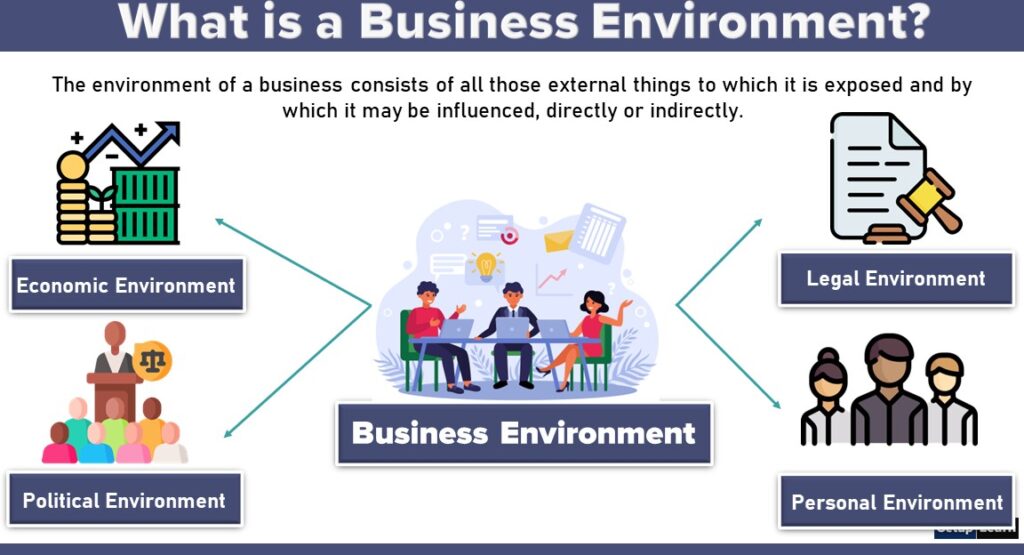
A business environment is the complete set of internal and external conditions — economic, social, political, technological, legal, and regulatory — that shape how a business operates, competes, and grows. If you're asking what do you mean by "business environment" in practical terms, it's simply every force a company can't fully control but still has to plan around, and one that can affect a business in ways that are hard to reverse once ignored. Understanding the importance of the business environment is the first step toward making informed business decisions, since no enterprise functions in isolation.
For businesses in regulated sectors — manufacturing, electronics, steel, FMCG, or any industry needing BIS, ISI, or CRS certification — this isn't just an academic concept. What do you mean by "business environment" here really comes down to one thing: everything that decides whether your product can legally reach the market on time. We've seen both sides of this at Sheen Consultancy—products that clear customs on schedule and products that get stuck because nobody was tracking a standard revision.
Concept of Business Environment
The concept of the business environment highlights that every organization operates within a network of external factors. These factors shape opportunities, risks, and overall performance, and can significantly impact businesses of every size. Businesses may not control these forces, but understanding them helps managers plan better strategies.
A well-analyzed business environment allows firms to respond effectively to market changes, government policies, technological developments, and consumer behavior—and, for regulated industries, to stay ahead of certification and compliance requirements rather than reacting to them after the fact.
Internal vs. External Business Environment
Businesses can adjust their internal environment relatively quickly. The external environment — especially regulatory changes — requires continuous monitoring, which is exactly why compliance consulting exists as a function. No matter how well a business operates internally, it still has to answer to forces outside its own walls.
Most explanations of this topic only discuss external forces. But a complete picture needs both, since the business environment includes conditions a company can shape as well as ones it can only respond to.
Internal Environment (within the company's control)
- Management structure and decision-making style
- Workforce skills and organizational culture
- Financial resources and production capacity
- Brand value and existing certifications
External Environment (outside the company's control)
- Government regulations and certification requirements (e.g., BIS Scheme X, ISI marking)
- Market competition and consumer demand
- Technology shifts
- Economic conditions (inflation, interest rates, import-export policy)
Micro vs. Macro Business Environment
Understanding both layers helps a company separate "things I can fix by changing my supplier" from "things I can only adapt to, like a new mandatory certification requirement."
- Microenvironment—factors close to the business that directly affect operations: suppliers, customers, competitors, and regulatory bodies like the Bureau of Indian Standards (BIS).
- Macro environment — broader forces affecting all businesses in an economy: GDP growth, national trade policy, technological disruption, and demographic shifts.
Components of Business Environment
The components of business environment are the individual building blocks that combine to form the overall environment a business operates in. In simple terms, the business environment includes every internal and external condition a company has to account for, from raw material availability to how prevailing economic conditions and market conditions shift demand for its goods and services.
Each component interacts with the others—for example, a change in the legal component (a new BIS certification requirement) can directly affect the economic component (cost of compliance) and the technological component (need for upgraded production processes).
These include:
- Economic component — inflation, interest rates, taxation, GDP growth
- Social component — consumer values, demographics, lifestyle trends
- Political component — government stability, ruling party policies
- Legal & Regulatory component—certification mandates (BIS, ISI, CRS), labor law, environmental law
- Technological component — automation, digital adoption, innovation cycles
- Demographic component — population size, age distribution, workforce availability
Importance of Business Environment
1. Spotting Opportunities Early (First-Mover Advantage)
Companies that track environmental shifts—new government schemes, changing consumer preferences, emerging technology—can act before competitors do. Identifying opportunities early, rather than reacting to them once they're obvious to everyone, is often what separates market leaders from the rest.
When BIS introduced mandatory certification for additional product categories under Scheme X, businesses that registered early avoided last-minute compliance bottlenecks.
They also gained a head start with retailers and export buyers who now require certified products. Timing matters more than people expect here.
2. Identifying Threats Before They Escalate
New entrants, substitute products, and regulatory tightening can all threaten an established business.
A useful early-warning example: when the government expands the list of products under mandatory BIS certification, non-compliant manufacturers risk product seizures and import bans.
Businesses that monitor regulatory updates — rather than reacting after a notification takes effect — avoid production stoppages.
3. Efficient Use of Resources
The environment decides what raw materials, technology, and skilled labor are available and at what cost. Companies shifting from older technologies (CRT to LED, or now incandescent to smart lighting under updated BIS standards) tend to succeed by reading these shifts early, not by being forced into them once the regulation lands.
4. Adapting to Rapid Change
Markets and regulations move fast. In India specifically, BIS periodically revises product standards, and businesses without a system to track these changes risk non-compliance penalties. Continuous environmental monitoring — through updates, industry bulletins, or a compliance partner — shortens the time between "regulation changes" and "business adapts," since it's the factors that influence demand and compliance that shift fastest.
5. Building Trust and Reputation
A business that's seen as compliant, certified, and environmentally aware ends up building stronger relationships with regulators, retailers, and customers. It's not glamorous, but ISI-marked and BIS-certified products carry a trust signal that uncertified competitors simply can't match.
6. Continuous Learning and Improvement
Businesses that treat environmental scanning as an ongoing habit — not a one-time exercise — consistently outperform those that only react to crises. Airlines like IndiGo built their reputation on operational reliability by continuously acting on customer and market feedback; the same discipline applies to compliance-heavy manufacturing businesses tracking evolving certification norms. This is really what the importance of business environment comes down to in practice — habitual awareness rather than occasional attention.
Features of Business Environment
- Totality of forces — includes every internal and external factor, not just a few
- Specific and general forces—some (like a supplier) affect one business directly; others (like inflation) affect entire industries
- Interrelated—a change in government policy can shift consumer demand, which then affects competitor strategy
- Dynamic and uncertain—regulations, technology, and markets change continuously, often without long notice periods
- Relative—What's an opportunity in one country or state may be a constraint in another (e.g., differing state-level compliance timelines)
Nature of Business Environment
This uncertain, ever-shifting nature is precisely why continuous environmental monitoring — rather than a one-time assessment — is essential for long-term business survival.
The nature of business environment can be understood through the following characteristics:
- Complex — it consists of many interlinked environmental factors that are difficult to analyze in isolation, since these environments include factors that rarely move independently of one another
- Dynamic — it keeps changing due to shifts in technology, policy, and consumer behavior
- Multi-faceted—the same environmental change (e.g., a new regulation) can look like an opportunity to one business and a threat to another, depending on how prepared each is
- Far-reaching impact—changes in the environment affect not just a single business but entire industries and the broader economy
- Uncertain — future changes, especially regulatory ones, are often difficult to predict with full accuracy
Dimensions of Business Environment
| Dimension | What It Covers | Example Impact |
|---|---|---|
| Economic | Inflation, interest rates, GDP growth | Affects pricing and expansion decisions |
| Social | Consumer values, demographics, lifestyle trends | Shapes product design and marketing |
| Technological | Innovation, automation, digital shift | Determines competitiveness and production methods |
| Political | Government stability, trade policy | Influences market entry and investment risk |
| Legal & Regulatory | Certification mandates (BIS, ISI, CRS), labor law, environmental law | Directly determines whether a product can legally be sold |
FAQs About Business Environment Matters
1. What is the business environment in simple words?
It's the full set of external and internal conditions—economic, legal, social, technological — that affect how a business operates and makes decisions.
2. How is the business environment different from the market environment?
The market environment (customers, competitors, pricing) is one part of the broader business environment, which also includes regulatory, political, and technological forces.
3. Why does the business environment matter for compliance and certification?
Because regulatory requirements — like BIS or ISI certification — are a core part of the external legal environment. Businesses that monitor this dimension avoid penalties, product recalls, and market-entry delays.
4. What happens if a business ignores its environment?
This is exactly why the importance of business environment cannot be overstated—ignoring it risks poor strategic decisions, loss of competitiveness, regulatory non-compliance, and, in serious cases, forced exit from the market.
5. What are the 5 types of business environment?
The five main types are economic, social, political, technological, and legal (regulatory) environment. Some frameworks also add a demographic dimension as a sixth type.
6. What is the nature of the business environment?
It is complex, dynamic, uncertain, and far-reaching—a single change, like a new regulation, can ripple across an entire industry rather than just one company.
7. What are the components of business environment?
The main components are economic, social, political, legal, technological, and demographic factors that together shape how a business operates and grows.
8. Is business environment internal or external?
It is both. Internal environment includes management, culture, and resources within the company; external environment includes market, government, and regulatory forces outside the company's control.
9. How can a business stay updated on its regulatory environment?
Through direct monitoring of government notifications, industry bodies, or working with a compliance consultant who tracks BIS/ISI/CRS standard revisions on the business's behalf.
Need Help with Compliance?
Let our experts guide you through the certification process.
Contact Us Today
About the Author
Arsh Mohammad
Founder & CEO
15+ Years ExperienceVisionary leader with 15+ years in regulatory compliance, driving innovation and excellence in BIS certifications across India's industrial landscape.