BIS Certification vs Other Quality Standards: A Simple Guide for Businesses
Businesses must achieve product excellence while meeting regulatory requirements because these standards have become essential in contemporary international markets. The primary legal requirement that manufacturers and importers need to enter BIS certification in India, which serves as the most crucial compliance requirement.
Many businesses assume that having ISO certification, a CE Mark, or UL certification is enough to sell products in India. The public misunderstanding of this concept creates multiple dangerous situations which include customs clearance delays and shipment seizure and legal penalties. Indian regulations maintain strict enforcement, while international certifications do not exempt companies from obtaining BIS approval.
This guide explains the difference between BIS certification and other quality standards, helping businesses understand what is required and why.
What Is BIS Certification in India?
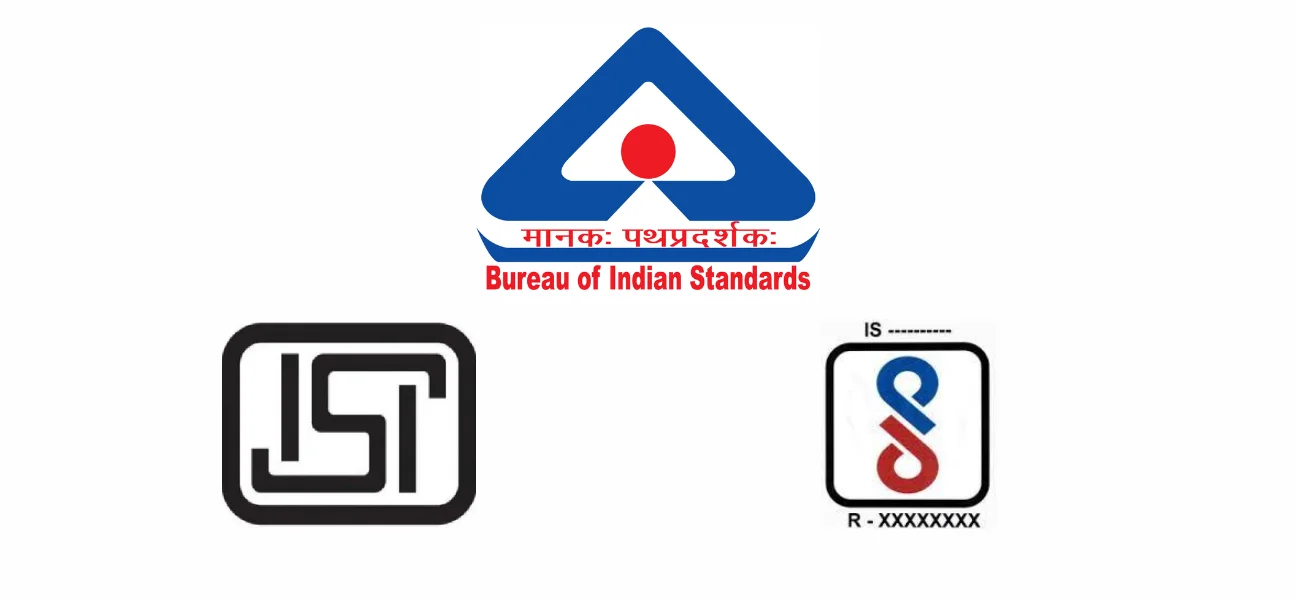
The Bureau of Indian Standards (BIS) serves as the national standards organization for India. The organization exists to guarantee that products in India meet safety standards, reliability standards, and Indian quality requirements.
BIS certification serves as the requirement that products must fulfil before they can be legally manufactured, imported, or sold in India.
BIS certification holds crucial importance because it receives official recognition through Indian legal statutes. The approval from BIS becomes necessary for most products because it serves as a mandatory requirement instead of a choice.
Main BIS Certification Schemes
- ISI Certification: Required for industrial and consumer goods such as cement, steel products, batteries, kitchen appliances, and electrical items.
- CRS Certification (Compulsory Registration Scheme): Mandatory for electronics and IT products like LED lights, mobile phones, power banks, laptops, and solar equipment.
- FMCS (Foreign Manufacturers Certification Scheme): Designed for overseas manufacturers exporting regulated products to India.
BIS Certification vs ISO Certification
One of the most searched comparisons online is BIS vs ISO certification. Although both focus on quality, they serve very different purposes.
Product vs Process
- BIS Certification is product-focused. It confirms that a specific product meets Indian safety and performance standards through laboratory testing.
- ISO Certification is process-focused. It evaluates a company’s management system, such as quality control or environmental practices, but does not test individual products.
Legal Requirement
- BIS certification is mandatory for more than 350 product categories under Indian law.
- ISO certification is voluntary and mainly helps with internal efficiency, branding, and global credibility.
Important note: An ISO-certified factory still needs BIS certification if the product falls under mandatory BIS rules.
BIS vs CE Mark and UL Certification
Manufacturers involved in international trade often compare BIS certification with CE Mark and UL certification. The Indian market requires BIS certification as a mandatory requirement for products that already possess CE or UL certification.
- BIS Certification (India): Valid only in India and legally required for listed products. Requires testing in BIS-recognized Indian laboratories and factory audits.
- CE Mark (Europe): Required for the European market. Often based on self-declaration and does not guarantee acceptance in India.
- UL Certification (USA/Global): Widely accepted globally but mostly voluntary. Often required by retailers rather than governments.
BIS vs FSSAI and Agmark
In the food and agriculture sector, businesses often get confused between different certifications. Each certification serves a different purpose and cannot replace the other.
- FSSAI License: Mandatory for all food businesses in India. Focuses on food safety and hygiene.
- Agmark Certification: A quality grading system for agricultural products like pulses, oils, and honey.
- BIS in Food Products: Mandatory only for specific items such as packaged drinking water and infant formula, where both FSSAI and BIS (ISI mark) are required.
Why BIS Certification Is So Important
The organization possesses unique characteristics because of its ability to enforce certification standards. The Indian market operates under BIS certification because it functions as a legal requirement rather than a mere administrative procedure.
- Customs clearance in India is not possible without BIS approval for regulated products.
- Product testing is compulsory and must be done in BIS-recognized laboratories.
- Market surveillance is conducted regularly, where BIS officials test products picked directly from the market.
Conclusion: Choosing the Right Certification Strategy
For businesses, the choice is not between BIS and ISO—it is about using the right certification for the right purpose. Understanding compliance early helps businesses avoid three major problems, which include financial losses, project delays and legal issues.
- Use BIS certification to legally sell products in India
- Use ISO certification to improve internal systems and business credibility
- Use CE or UL certification for exporting to international markets
FAQs: BIS Certification
1. Is BIS certification mandatory in India?
Yes, for notified product categories, BIS certification is legally mandatory.
2. Can ISO certification replace BIS approval?
No. ISO focuses on management systems, while BIS focuses on product safety and compliance.
3. Is BIS required for imported products?
Yes. Imported products under mandatory categories must have BIS certification before customs clearance.
4. How long does BIS certification take?
The timeline varies by product and scheme, usually ranging from a few weeks to a few months.
5. What happens if BIS certification is ignored?
Products can be seized, sales banned, and penalties imposed under the BIS Act, 2016.
Tags:
Need Help with Compliance?
Let our experts guide you through the certification process.
Contact Us Today
About the Author
Arsh Mohammad
Founder & CEO
15+ Years ExperienceVisionary leader with 15+ years in regulatory compliance, driving innovation and excellence in BIS certifications across India's industrial landscape.