Ethical Business Practices and Code of Conduct in Business: A Practical Guide
Ask ten companies if they care about ethics, and all ten will tell you that they do. Ask them to show you, and most will simply hand you their policies or point you in the direction of the poster.
That gap is what everything else is about. Having integrity and being ethical in business has little to do with policies. It’s what people do when they have to do something that is contrary to company policy in order to get work done, or if someone in a higher position has asked them to do something, or if nobody of any authority is even present. Unfortunately, a lot of businesses sign and agree to these policies and expect something else to change in the way they do business, only to have the same things occur again.
This guide on business ethics and compliance looks at ethics from everyday workplace practices to codes of conduct that bring everything together. In this guide, we take a close look at the true definition of business ethics. What’s the difference between business ethics, integrity, and compliance? What does a well-designed code of conduct look like? Plus, 7 things you can get started on this month. Finally, we take a look at what the laws in India mandate from companies, with a bonus checklist and an FAQ.
What is business ethics?
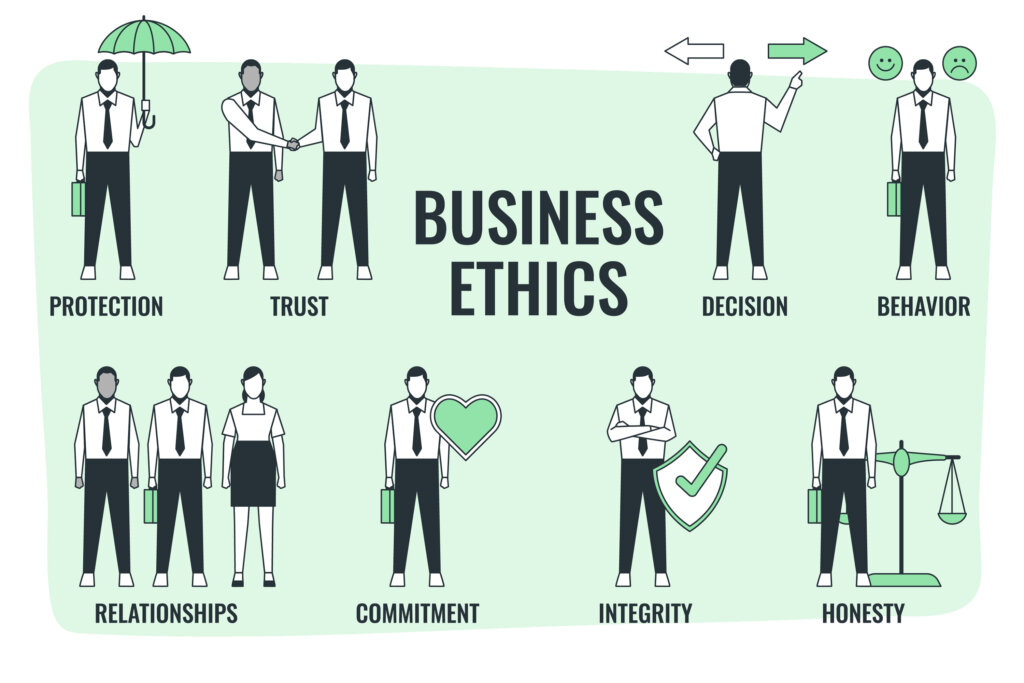
The concept of business ethics is simpler than it sounds. So what do you mean by business ethics in plain words? It's a set of moral principles that guide how a company makes decisions and treats its employees, customers, suppliers, investors and the wider community. It also goes further than the law. Plenty of things are perfectly legal and still unfair, misleading, or just plain wrong.
None of this counts until it shows up in ordinary decisions: how you set a sales target, which supplier you pick, and what you do when a customer complains.
Approaches and practices of business ethics look different in a ten-person agency and a large manufacturer, but the principles underneath don't change.
Most frameworks come back to the same handful of principles:
- Honesty: telling the truth in your marketing, contracts, and financial reporting.
- Fairness: treating people and partners equally, with no favourites.
- Transparency: being open about decisions, risks, and conflicts of interest.
- Accountability: owning the outcome, including your mistakes.
- Respect: protecting people's rights, safety, and personal data.
- Responsibility to society: thinking about your impact on communities and the environment.
What are ethical business practices?
To define ethical business practices in one line, they're the everyday actions that turn those principles into behaviour. Here's how that looks across a typical business:
|
Area |
What ethical looks like |
The shortcut to avoid |
|
Marketing |
Claims you can back up with proof |
Exaggerated or misleading promises |
|
Pricing |
Clear prices, with fees shown upfront |
Hidden charges that appear at checkout |
|
Suppliers |
Fair terms and payment on time |
Squeezing small vendors with late payments |
|
Employees |
Fair pay, safe workplaces, equal treatment |
Favouritism and ignored complaints |
|
Customer data |
Collecting only what you need and protecting it |
Selling or leaking personal data |
|
Gifts and hospitality |
Modest, declared and recorded |
Gifts that quietly buy favours |
|
Financial records |
Accurate and filed on time |
Backdating and creative accounting |
What are unethical practices in business ethics?
Flip that table around and you have the unethical list: bribery, misleading ads, hidden fees, discrimination, exploiting workers and misusing customer data. Good ethics also protect honest firms and their customers from unfair trade practices such as price-fixing, counterfeit goods and false product claims, because they set a standard above the legal minimum.
Ethics, integrity, and compliance: what's the difference?
Compliance is the minimum. Ethics and integrity are the standard you hold yourself to. The three overlap, but they aren't the same thing. Corporate compliance requirements, such as company law, tax, labour and data-protection rules, are the part you can't negotiate.
A company that runs only on rules teaches people to ask, "Is this allowed?" A company with a real ethical culture teaches them to ask, "Is this right?" The strongest business ethics and compliance programmes use both: clear rules, backed by values that people actually believe in.
|
Term |
What it means |
Example in practice |
|
Ethics |
The standards of right and wrong a business sets for itself |
A rule never to mislead customers, even where the law is silent |
|
Integrity |
Acting consistently with those standards, especially under pressure |
A manager turns down a deal that depends on a bribe |
|
Compliance |
Following laws, regulations and corporate ethics policies |
Keeping accurate records and filing statutory returns on time |
Benefits of ethical business practices: why integrity pays off
The reverse is just as true. When incentives reward profit and nothing else, people under pressure start cutting corners, and the written rules stop mattering. Culture, not paperwork, drives behavior.
Strong workplace integrity and ethics are a business advantage, not a cost. The importance of ethics shows up in everyday results.
- Trust: customers and partners prefer dealing with firms that keep their word.
- Talent: people stay longer and try harder where leadership is fair and honest.
- Lower risk: employees who feel safe speaking up flag problems before they turn into scandals or penalties.
- Better decisions: clear values make it easier to say no to a shortcut.
- Resilience: a good reputation helps you recover when something does go wrong.
7 steps to build a culture of ethics and integrity
Building an ethical workplace culture doesn't happen in one workshop. These seven steps are business ethics best practices for designing and managing ethical organizations, and they work as an ongoing cycle whether you run a 20-person firm or a multinational.
-
Put your values in plain language. Pick four to six ethical values in business and write each one as something a person can actually do. "Integrity" on a poster means very little. "We never backdate documents or hide errors" means something. And ask your employees to help with the wording, because a list handed down by the board rarely sticks.
-
Write a code people will actually read. A code of conduct in business is your culture in writing, so write it the way you'd explain things to a new colleague. Say what the standards are, what happens if someone breaks them, and who's covered, including contractors and anyone else working on your behalf. Use short sentences and real examples. If you're small, a clear ten-page document is plenty. Just make sure the code sits at the centre of your corporate ethics policies, which should also cover gifts, conflicts of interest and whistleblowing. We cover what to put in it in the next section.
-
Let leaders go first. People watch what leaders do, not what they say. Picture a sales head who tells the team to "close it however you can" on the last day of the quarter. Whatever the code says, that one sentence is now the real policy. Leaders need to explain why each standard exists, share honest stories of what went right and wrong, and apply the same rules to everyone, however senior or however good their numbers.
-
Train for real situations. Business ethics training programs work best when they're short, practical and repeated, because a yearly slide deck rarely changes behaviour. Use scenarios on bribery, gifts, conflicts of interest, data privacy and harassment, plus the corporate compliance requirements that apply to each role. Review the content whenever your risks change.
-
Make speaking up safe. Most people stay quiet for one reason: they're afraid of what happens to them next. So give them more than one route, such as their manager, a named HR or compliance contact, and an anonymous hotline or web form where local law allows. Publish a non-retaliation policy, and share anonymised examples of how past concerns were handled, so staff can see that reports lead to action.
-
Respond the same way every time, and keep one record. Investigate every report promptly, keep the person who raised it informed, and apply consequences fairly. Log every concern, whether verbal, written or from a helpline, in a single central register. A simple register is the backbone of workplace compliance management. Once it's in place, patterns start to show, like one department with repeated complaints, and so do the training gaps behind them.
-
Measure, audit and improve. You can track integrity through employee surveys, customer feedback, audit findings, policy-breach data and exit interviews. Review your risks at least once a year, report the results to the board and update your policies and training. Annual reviews keep workplace compliance management current as laws and risks change. And link recognition and incentives to ethical behaviour, not only revenue.
What should a good code of conduct include?
Most codes fail for a simple reason: they're written to protect the company, not to help the person holding them. Following business ethics best practices means writing the code as a working tool. The usual problems are easy to spot. Codes run too long, use legal language, give few examples and are hard to search. Many list ways to raise a concern but never say what happens afterwards, and many haven't caught up with AI tools yet.
A practical code usually covers:
- Who it applies to, including contractors, suppliers and other third parties.
- Your values, written as behaviours.
- A short message from the top that says why it matters.
- Bribery, gifts and hospitality, with clear limits.
- Conflicts of interest and how to declare them.
- Fair treatment, harassment and discrimination.
- Confidential information, customer data and the responsible use of AI tools.
- Accurate records and financial honesty.
- How to raise a concern, the non-retaliation promise and what happens next.
- A few simple questions to ask when the right answer isn't obvious.
- The consequences of breaking the rules.
Then make it easy to use. Keep it short, write in plain words, add real scenarios, make it searchable on a phone, and get managers to talk about it in team meetings. A signed acknowledgment only proves the code reached people, not that it helps them. Check whether employees actually go back to it, for example through a short survey or by looking at which questions reach HR.
The legal angle: what Indian companies should know
If you operate in India, two laws are worth knowing about. This is general information, not legal advice, so please check the current text with a qualified lawyer.
A vigil mechanism for whistleblowers.
Section 177 of the Companies Act, 2013, read with its rules, requires listed companies, companies that accept public deposits and companies that have borrowed more than Rs 50 crore from banks or financial institutions to set up a vigil mechanism. The audit committee oversees it, and it has to protect people who report in good faith from victimization.
Bribery by someone working for you.
After the 2018 amendment to the Prevention of Corruption Act, section 9 allows a commercial organisation to be punished if a person associated with it, such as an employee, agent or subcontractor, bribes a public servant to win or keep business for the company. The company's defence is to show that it had adequate procedures in place to prevent bribery. Section 10 goes further: directors and other officers can face three to seven years in prison, plus a fine, if the offence happened with their consent or connivance. Official guidance on what "adequate procedures" means was still awaited when the amendment came in, so check the latest position.
Put simply, your code, training and reporting channel aren't decoration. They're part of your protection.
Who owns ethics? Roles across the organisation
Clear ownership also makes workplace compliance management easier, because everyone knows who handles what. So how does a board of directors ensure ethical practices in a business organisation? By asking for regular conduct reports, questioning gaps between values and behaviour, and checking that management acts on what it finds.
Workplace integrity and ethics are everyone's job, but each level of the business owns a different piece of it.
|
Level |
Main role |
What it looks like in practice |
|
Board |
Stewardship |
Reviews conduct and compliance reports regularly, asks where behaviour departs from values, and makes sure compliance, risk, HR and audit teams have resources and a voice |
|
Top management |
Lead by example |
States values simply and consistently, holds senior people accountable, and tracks integrity through surveys and code-of-conduct assessments |
|
Middle and line managers |
Communicate and listen |
Turn values into daily decisions, spot warning signs early, escalate concerns and reinforce good behaviour |
|
Every employee |
Practise and speak up |
Follows the code of conduct in business, asks when unsure and reports concerns in good faith |
Common mistakes to avoid
- Treating the code as a one-time signature. If nobody revisits your corporate ethics policies, they turn into wallpaper.
- Exempting top performers or senior leaders. One visible exception tells everyone the rules are optional.
- Running generic annual training. Business ethics training programs that ignore your real risks don't change behaviour.
- Measuring only sales and profit. Targets with no ethical guardrails push people towards shortcuts.
- Ignoring local context. Norms around gifts and hospitality differ between regions, so your policy should say clearly what's acceptable where, since corporate compliance requirements also differ by country.
Quick self-assessment checklist
Tick what's already true in your business to see how well you follow business ethics best practices.
- [ ] Our values are written as specific behaviours, not slogans.
- [ ] Our code of conduct in business covers employees, contractors and third parties.
- [ ] Every employee has acknowledged the code in the last 12 months, and we check that people actually use it.
- [ ] Leaders can name recent examples of ethical decisions they made.
- [ ] Staff can report concerns anonymously and without fear of retaliation.
- [ ] All reports are logged in one place and reviewed for patterns.
- [ ] Every report gets a timely response, and the reporter is kept informed.
- [ ] Our business ethics training programs are scenario-based and refreshed at least yearly.
- [ ] The board reviews ethics and compliance results at least once a year.
- [ ] Incentives reward how results are achieved, not only the results.
FAQs About ethical business practices
1. How long does it take to build an ethical culture?
There's no fixed timeline for building an ethical workplace culture. A code and a reporting channel can be in place within weeks, but trust and habits take longer and depend on leaders behaving consistently over time. Treat it as an ongoing commitment, not a one-off project.
2. Does a small business need a code of conduct?
Yes. Even a team of five benefits from a two-page code of conduct in business. It gives everyone a shared reference point, helps you handle disputes consistently and shows customers and partners what you stand for.
3. How often should we update our code?
At least once a year, and whenever something big changes, such as a new law, a new country, a new type of supplier or a new technology.
4. How can we support ethical business and fair labor practices?
Pay wages on time, provide safe working conditions, prohibit discrimination and forced or child labour, hold suppliers to the same standards and give workers a safe way to report problems.
How Sheen Consultancy can help
Building an ethical culture is a long haul, and many businesses aren't sure where to begin. Sheen Consultancy can help you see where you stand today, draft or refresh your code of conduct and policies, design practical training for your teams, and set up reporting and monitoring that fits your size and industry.
Conclusion: ethical business practices
Building an ethical workplace culture comes down to consistent daily actions, not a single policy launch. Start with clear values and a short, usable code, then keep going: leaders model it, people are trained on real situations, and speaking up stays safe. Businesses that adopt ethical practices earn trust from customers, attract and keep good people, and catch problems before they grow.
Ready to strengthen business ethics and compliance in your organisation? Get in touch with Sheen Consultancy and we'll talk through the right starting point for your business.
Need Help with Compliance?
Let our experts guide you through the certification process.
Contact Us Today
About the Author
Arsh Mohammad
Founder & CEO
15+ Years ExperienceVisionary leader with 15+ years in regulatory compliance, driving innovation and excellence in BIS certifications across India's industrial landscape.
Related Articles
Vendor Compliance Management: Keeping Third-Party Partners Accountable
5 min read
Read More →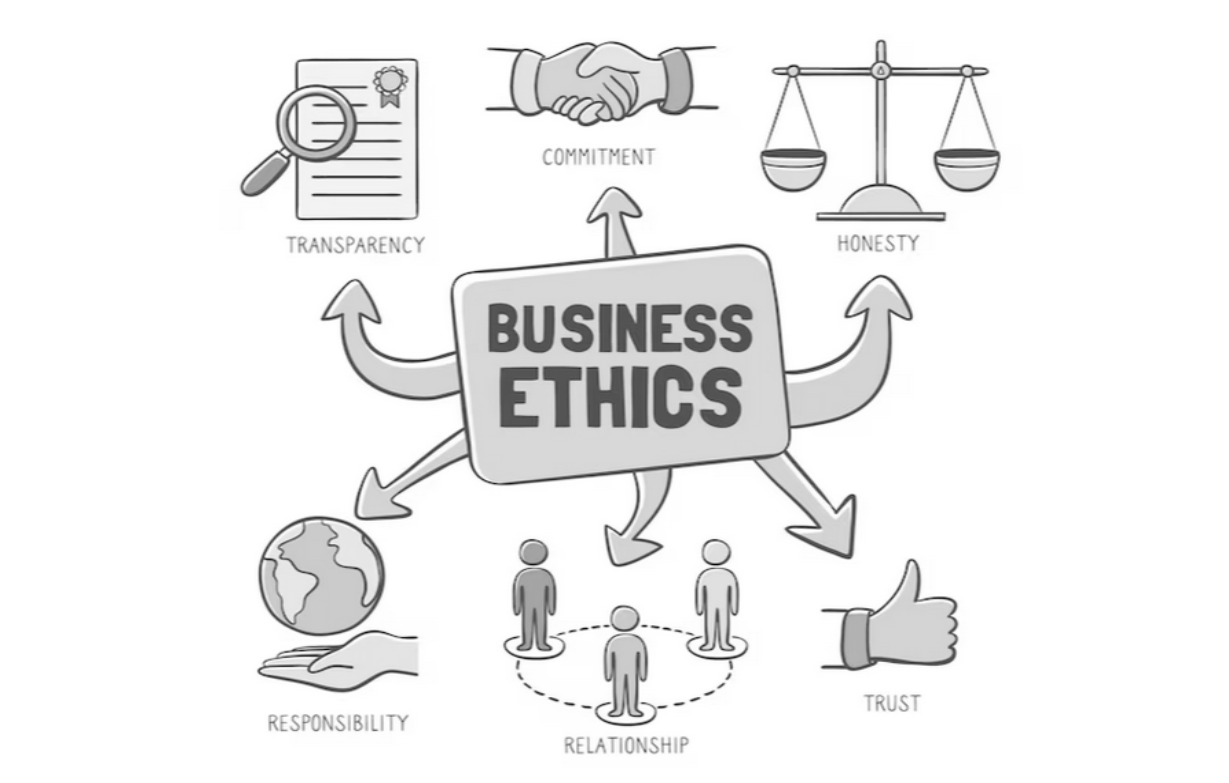
Business Reputation Starts with Trust: A Compliance Strategy Built on Ethical Business Practices
5 min read
Read More →
The Complete Audit Compliance Guide: How to Build an Audit-Ready Business
5 min read
Read More →