What Is ISI Certification? Meaning, Process, and Importance Explained
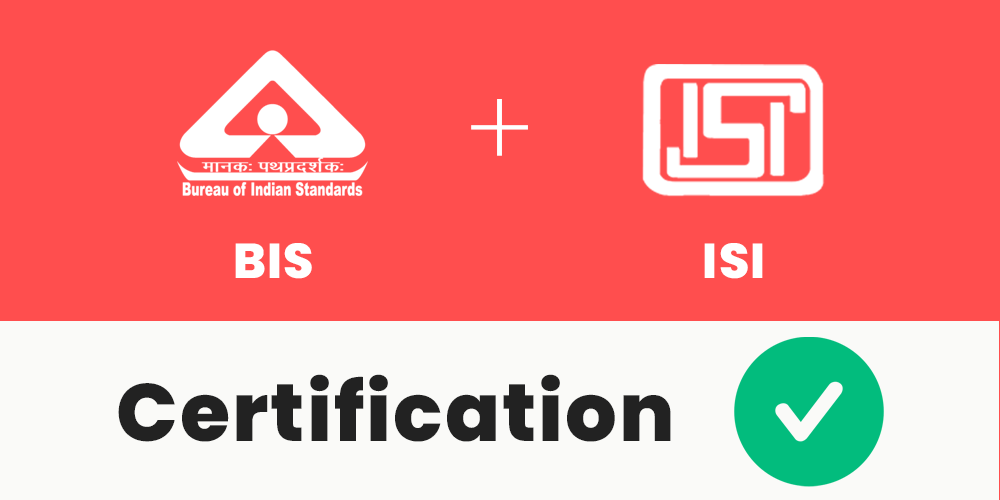
You need to verify product safety by testing electric irons, water heaters and cement that you purchase for your home. You need to test the product to confirm it will not create hazards through damage, short-circuiting, or malfunction at critical moments.
The government of India uses a rectangular ISI mark as the official safety certification mark for all products.
ISI certification serves as one of India's most reliable quality marks that consumers trust. The certification shows consumers that a product has undergone testing to achieve safety standards. The certification process helps manufacturers establish their business reputation while they meet all required legal standards. We need to examine ISI certification because it establishes the precise standards that define its purpose and operation.
What is ISI Certification?
The ISI certification requires products to meet safety standards and quality standards that the organisation Bureau of Indian Standards (BIS) established. The ISI mark certification exists as a requirement for more than 130 products, which include electrical appliances, cement, and kitchen items, to prove their safety and quality to customers.
The ISI mark originally came from the Indian Standards Institution, established in 1955. The Bureau of Indian Standards (BIS) renamed itself in 1987, but people still refer to its certification mark as ISI.
BIS currently oversees and controls all aspects of the ISI certification system. The mark on a product indicates that the item has undergone testing, which confirms its compliance with Indian Standards (IS) requirements. The sticker serves as evidence that the product meets national safety requirements.
Key Aspects of ISI Certification
✔ Significance
ISI certification serves as a mark of quality assurance. It reduces the risk of accidents, improves product reliability, and ensures durability.
✔ Mandatory Items
More than 130 products require mandatory ISI certification. These include electrical switches, wiring cables, heaters, cement, LPG cylinders, automobile tyres, and various kitchen and household items.
✔ Process
Manufacturers must get their products tested in BIS-recognized laboratories. They must also undergo factory inspections before receiving certification.
✔ Authority
Although the mark originated from the Indian Standards Institution, it is now fully managed by the Bureau of Indian Standards (BIS).
Why ISI Certification Is Important
1. Consumer Safety
The biggest benefit of ISI certification is consumer protection. The electrical appliances and LPG cylinders become dangerous products when their manufacturing process fails to meet safety standards. The ISI mark ensures they meet safety standards.
For example, ISI-marked electrical wires undergo fire resistance testing, which decreases the likelihood of domestic accidents.
2. Legal Compliance
The audience requires mandatory ISI certification for particular products because it serves as their only valid option. In India, selling cement and LPG cylinders and electrical equipment without ISI certification violates the law.
Businesses that fail to comply with regulations will face both severe financial penalties and criminal prosecution.
3. Market Credibility for Manufacturers
For manufacturers, ISI certification increases customer trust. It improves brand image and allows participation in government tenders, where certified products are often required.
4. Quality Control
Because manufacturers must follow BIS standards strictly, product defects and quality issues are significantly reduced.
Categories That Require Mandatory ISI Certification
These products directly impact public safety, which is why certification is compulsory. Some major categories that require ISI certification include:
- Electrical appliances (heaters, switches, irons, cables)
- Building materials (cement, steel, glass)
- Food products (packaged drinking water, infant food)
- Automotive components (helmets, tyres)
- LPG cylinders and industrial products
The ISI Certification Process
Getting ISI certification is a structured and detailed process.
Step 1: Identify the Indian Standard (IS Code)
The manufacturer must first determine which Indian Standard applies to their product.
Step 2: Submit Documentation
Documents such as factory registration details, manufacturing process flowcharts, machinery details, and in-house testing capabilities must be submitted.
Step 3: Factory Inspection
A BIS officer visits the manufacturing unit to inspect the infrastructure and quality control system.
Step 4: Product Testing
Samples are collected and sent to BIS-approved laboratories for testing. The product must pass all required quality parameters.
Step 5: Grant of License
If everything is satisfactory, BIS grants the ISI license.
Step 6: Ongoing Surveillance
Certification is not permanent without monitoring. BIS conducts regular inspections to ensure continuous compliance.
How to Identify a Genuine ISI Mark
You can verify the CM/L number on the official BIS website. Because fake marks exist, you should always verify:
- The ISI Logo (rectangular frame)
- The IS Number printed above the logo (e.g., IS: 1234)
- The CM/L number (7-digit license number) printed below the logo
Your Trusted Partner for BIS Certification in India
Accelerate your product approval with Sheen Consultancy, the premier BIS certification in India. We provide fast, reliable, and end-to-end compliance solutions for brands, manufacturers, and importers. From documentation to final approval, our experts ensure a smooth certification process. Partner with us and simplify your BIS certification journey today.
Final Thoughts: ISI certification
The ISI mark is more than just a logo; it is a sign of trust, safety, and quality. It safeguards consumers against poor-quality products and also ensures that the products are made in accordance with stringent national standards.
In today’s market, where cheaper alternatives are easily accessible, the ISI mark helps you make better and more informed decisions.
Always look for the ISI mark. You guarantee that the product you are using is of India’s quality and safety standards.
FAQs About ISI Certification
1. How to get ISI certification for a mineral water plant?
To obtain ISI certification for a mineral water plant, you have to apply to BIS on IS 14543 (Packaged Drinking Water). You require appropriate water testing equipment in your factory. The officers of BIS will test your water samples. If all is well, they will provide you with the license.
2. Is an ISI certificate needed for exporting food products?
The ISI certification is required only for the sale of certain products in India. For the export of food products, you normally have to comply with the regulations of the country to which you are exporting. But having the ISI certification will certainly help.
3. How is the certificate course in business analytics at ISI Calcutta?
The Business Analytics course at ISI Calcutta is very reputed. It focuses strongly on statistics and data analysis. It is good for professionals who want to build strong analytical skills and grow in data-related careers.
4. How to apply for BIS certification for ISI mark?
You can apply online through the BIS website. Submit your product details, factory documents, and testing information. BIS will inspect your factory and test your product samples. If everything is correct, they will grant the ISI mark license.
5. How to apply for an ISI certificate?
To apply for an ISI certificate, you must first find the correct IS standard for your product. Then, apply to BIS with the required documents. After factory inspection and product testing, BIS will approve your certification if all requirements are met.
Need Help with Compliance?
Let our experts guide you through the certification process.
Contact Us Today
About the Author
Arsh Mohammad
Founder & CEO
15+ Years ExperienceVisionary leader with 15+ years in regulatory compliance, driving innovation and excellence in BIS certifications across India's industrial landscape.
Related Articles

Vendor Compliance Management: Keeping Third-Party Partners Accountable
5 min read
Read More →
Business Reputation Starts with Trust: A Compliance Strategy Built on Ethical Business Practices
5 min read
Read More →
The Complete Audit Compliance Guide: How to Build an Audit-Ready Business
5 min read
Read More →